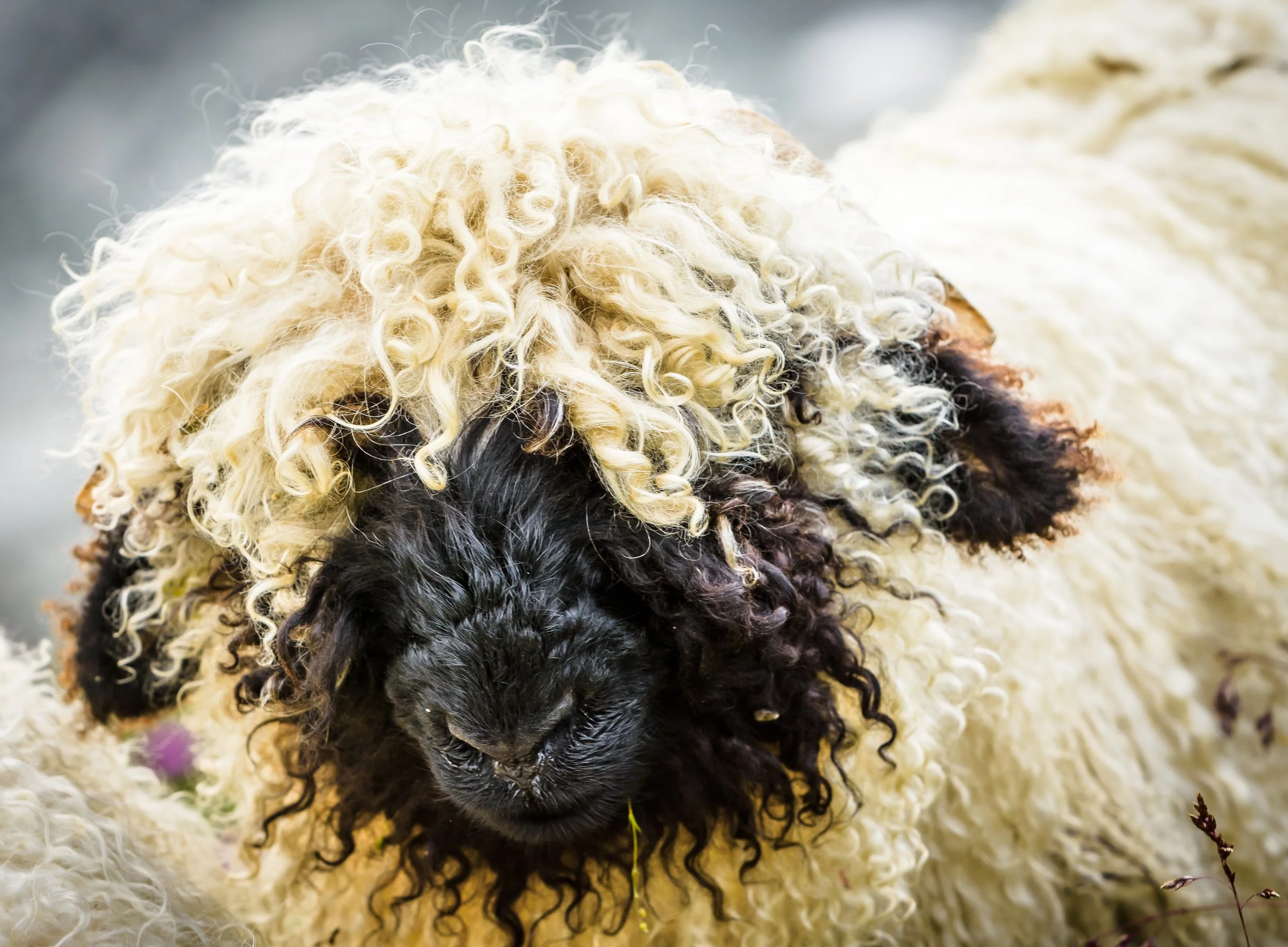
The Valais Blacknose Sheep Breed
History – Breed Characteristics
The Valais Blacknose Sheep is often dubbed the “cutest sheep in the world,” but it is not just a cute face—this breed has also been recognized for its docility and very friendly nature. Native to the Valais region of Switzerland, the Valais Blacknose Sheep is a dual purpose coarse long wool breed that is raised for both meat and wool. The breed’s ancestry date back to the fifteenth century.
The breed was first brought to the U.S. in the Fall of 2017 through a breed-up process (upgrading), using imported semen from fullblood Valais Blacknose rams from the UK. Due to strict U.S. livestock import regulations, especially concerning disease control, live animals and embryos could not be imported directly from the UK or other European countries initially. Instead, breeders used artificial insemination with fullblood Valais Blacknose genetics to begin building American lines. American breeders began crossing Valais Blacknose semen with complimentary sheep breeds to gradually increase the percentage of Valais genetics over generations. These programs resulted in the production of American Valais Blacknose Percentages and eventually American Valais Blacknose Purebred (Ewes greater than 93.75% and Rams greater than 96.625% Valais Blacknose), verified through DNA parent verification testing and pedigree tracking.
As the USA breeders were developing Valais Blacknose genetics from the breed-up program, New Zealand breeders were able to import fullblood Valais Blacknose embryos into their country from the UK. With less disease risk from New Zealand and not as strict import requirements, fullblood embryos were approved to be imported to USA from New Zealand. USA breeders were able to import the first fullblood Valais Blacknose embryos in 2020, resulting in the first Valais Blacknose Fullblood born on American Soil in January of 2021. Since this time, American breeders have been developing fullbloods to thrive in the divers USA geographics, climates, and market opportunities.
Physical Characteristics
Traditional Marked Valais Blacknose have a black face mask, ears, and black knee/hock spots contrast with their curly white fleece. Ewes will have a black spot around and under their tail region. Rams do not have a black spot in the tail region.
Spitti Marked Valais Blacknose have additional black spots or patches in the traditional white wool area on the body. The color is predominantly black wool or irregular black spots of the body wool. The color pattern is similar to piebald markings seen in other breeds.
Fullblood rams and ewes have spiral-shaped horns. American Purebred and American Percentages may be polled depending on foundation breeds.
Size, Build, and Reproduction
Rams: 175-285 pounds, 30-35 inches tall
Ewes: 155-200 pounds, 27-31 inches tall
Bred to thrive in harsh mountain environments. Perform well in cooler climates but can adapt to varying climates when responsibly managed.
The breed is known to breed year around or commonly referred to as out-of-season breeders. Ewes typically have single or twin births.
Wool & Meat
Coarse white wool with a fiber diameter around 38 micron. The wool grows incredibly fast, at about an inch per month, thus requiring animals to be sheared 2-3 times per year depending on the season and region they are raised in. The wool is used in felting, carpets, and other durable wool products.
Annual wool yield: 10-14 pounds per year.
Though dual purposes, they are primarily raised for meat.
Temperament
Known for their gentle nature and sociable behavior.
Thrive in flocks and enjoy human interaction.